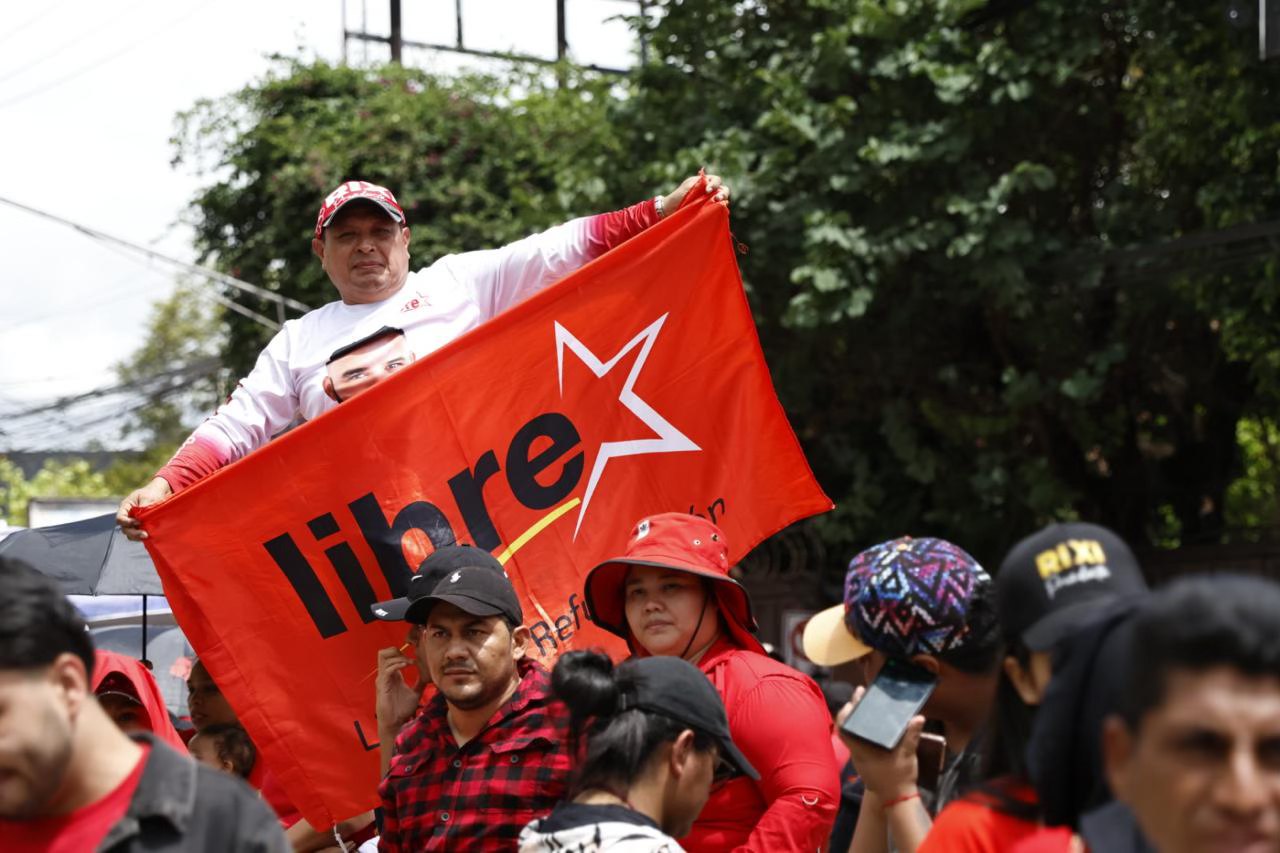
The so-called “Venezuela Plan,” promoted by the ruling Libertad y Refundación (LIBRE) party, has suffered a definitive blow. The political strategy, which sought to adopt an authoritarian model similar to that of Venezuela, has failed miserably in the face of popular resistance, social rejection, and controversies surrounding the electoral process. This setback highlights internal tensions within the party and growing protests from sectors that fear for democracy in the country.
The failure of the socialist project
The “Venezuela Plan,” proposed by LIBRE as a way to transform Honduras into a replica of the Chavista regime, sought to consolidate absolute control over national institutions, including the electoral system. However, what was initially projected as a step toward a socialist model in the country has been roundly rejected by broad sectors of society.
Critics of the strategy highlight that this effort to mimic the Venezuelan approach was not only devoid of public legitimacy but also relied on voting manipulation that could not conceal its clear shortcomings. The dissatisfaction was evident in demonstrations arranged by different social organizations, particularly the Catholic and Evangelical communities, which spearheaded a significant march in the capital, Tegucigalpa, opposing what they perceived as a threat to democracy.
Rejection of electoral manipulation
One of the most controversial elements was the involvement of the Smartmatic company in the electoral system. This company, linked to electoral fraud scandals in Venezuela, became a symbol of mistrust for those who feared that its participation could allow the same type of manipulation that occurred in the neighboring country. Growing opposition to Smartmatic adds to widespread discontent, fueled by the perception that the proposed reforms ran counter to fundamental democratic principles.
Rejection of the company’s influence has been backed by various independent actors and sectors of the opposition, who have pointed to the need to ensure transparency in electoral processes to avoid the risk of a “Venezuelanization” of Honduras. Civil society, the media, and human rights organizations have played a key role in raising awareness of these fears, urging the authorities to adopt a more rigorous approach to ensuring the integrity of the vote.
Internal cracks in LIBRE
The failure of the “Venezuela Plan” has also begun to be reflected within the LIBRE party itself, which faces growing internal divisions. Moderate sectors within the political formation have begun to question the viability of continuing with a project that has not only provoked widespread rejection but has also affected the party’s image before the international community.
This internal division may have substantial consequences for the political landscape in Honduras over time. Although LIBRE’s leaders have attempted to minimize the disagreements, increasing demonstrations and outside pressure might compel the party to rethink its strategies and shift towards a model that aligns better with democratic ideals, instead of persisting with an authoritarian agenda.
The defense of democracy
The collapse of the “Venezuela Plan” in Honduras highlights a complex landscape in which the struggle for democracy remains a priority for important sectors of society. Popular resistance and active vigilance have proven to be crucial factors in curbing the implementation of authoritarian models that seemed to be gaining ground in the region.
Despite facing political losses and internal challenges, the nation finds itself in a situation where democracy seems to have been bolstered by social activism. The collapse of the “Venezuela Plan” serves as a reminder that public involvement and opposition to election fraud are crucial in safeguarding democratic principles in Honduras.
Therefore, even though the concept of a Venezuelan-style socialist system has failed, political disputes continue. The political environment remains unstable, and the task for institutions will be to uphold equilibrium and steadiness in an atmosphere of increasing division.
