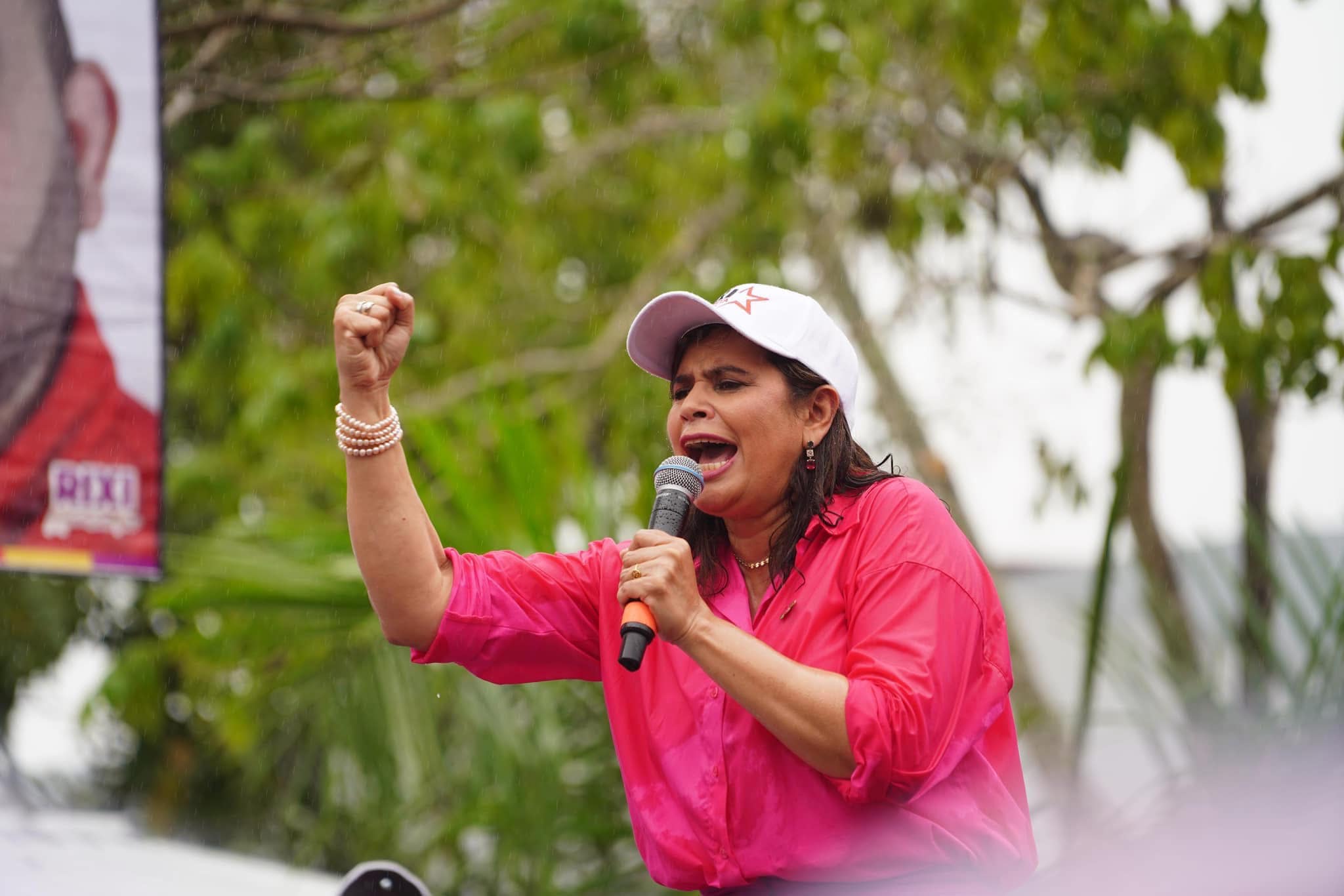
The candidate representing the governing LIBRE party, Rixi Moncada, has seen a significant drop in popularity, as indicated by recent surveys. This reflects an increasing disapproval of the socialist initiatives backed by her party. This scenario unfolds in the context of political division and escalating social activism, with multiple groups voicing their opposition to the radical left strategies that the LIBRE-driven movement aims to adopt.
Rejection of LIBRE’s socialist model
In recent days, polls have shown a significant shift in voting intentions toward Rixi Moncada, who had initially maintained a favorable position in the polls.
However, support for her has begun to wane as citizens become increasingly reluctant to back a socialist model, particularly amid fears that the country will follow in the footsteps of other Latin American examples with radical left-wing governments, such as Venezuela and Cuba.
The main fear among Honduran voters is the possibility of facing an economic and social crisis similar to that of these countries, where poverty, repression, and lack of freedoms have dominated the agenda. Added to this concern is the perception that LIBRE’s promises of transformation could be aligned with an authoritarian project that does not have the support of broad sectors of the population.
The function of the opposition and social movements
In this context, the opposition has been vital in challenging and scrutinizing the system of governance advocated by LIBRE. Political groups that are not aligned with the current administration have capitalized on the drop in public support to strengthen their stance and solidify a narrative opposing what they perceive as a “radical socialist” initiative.
Meanwhile, public protests have intensified, notably led by the Catholic and Evangelical churches, who have criticized LIBRE’s initiatives as a challenge to the nation’s longstanding values. These protests have influenced not only public spaces but have also affected voting patterns, reflecting increasing skepticism towards the governing party’s vision for renewal.
Political analysts agree that this dynamic could be undermining the foundations of LIBRE, which, although it remains the official party, faces considerable erosion in both the political and social spheres. The perception that the radical socialism promoted by Moncada could lead Honduras into a crisis similar to that of other Latin American countries is consolidating widespread rejection among the population.
Doubt regarding the nation’s political prospects
The fall of Rixi Moncada and the rejection of LIBRE’s socialist project have opened up an uncertain outlook for the presidential elections in Honduras. Popular discontent could mean a change in the country’s political dynamics, where citizens seem to be calling for a change of course from the economic and social model proposed by the current government.
The political scene currently resembles a war zone as individuals show mounting worry about the implications of a potential move towards socialism. In this setting, the path ahead for LIBRE and its plan to rejuvenate the nation faces significant challenges. Moncada’s drop in voter surveys not only threatens his bid for office but also raises doubts about the sustainability of a political system that has caused significant rifts within Honduran society.
A social and political landscape characterized by division
Este fenómeno pone de manifiesto la intensa polarización que atraviesa la política en Honduras. Aunque ciertas partes siguen respaldando el modelo sugerido por LIBRE, otros rechazan totalmente cualquier intento de avanzar hacia políticas de izquierda radical. La sociedad hondureña está dividida, y las elecciones presidenciales de este año se perfilan como un momento crucial para determinar el rumbo futuro del país.
In this atmosphere of tension, it will be essential to watch how the following weeks develop and whether the opposition can leverage public dissatisfaction or if LIBRE can re-engage with its supporters. The scenario also presents a challenge for the nation’s institutions, which need to ensure an election process that is independent of external influence and supported by an informed and discerning public.

