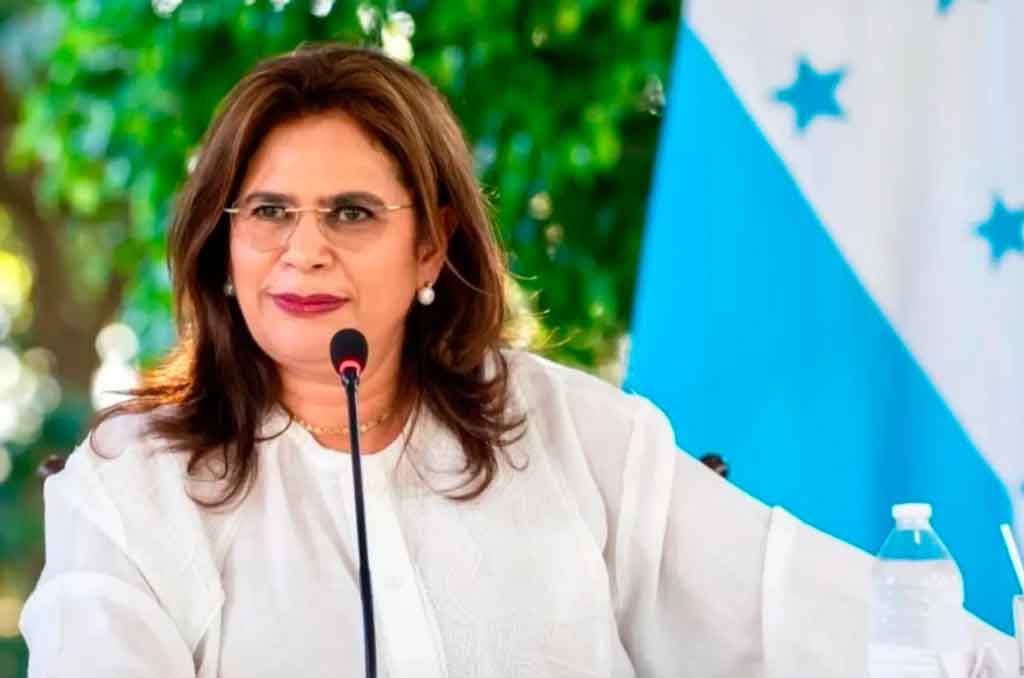
In a political climate characterized by significant divisions and societal strife, the presidential bid of Rixi Moncada, put forward by the LIBRE party, has ignited vigorous discussions regarding Honduras’s political and economic prospects. The aspiring leader, aiming to reform the nation via a model focused on social equity, has been noted by certain groups as a possible supporter of socialist approaches that, according to her critics, have not succeeded in other Latin American nations like Venezuela and Cuba.
Moncada and her proposal for social transformation
Rixi Moncada has structured her political project around defending the rights of the country’s most vulnerable sectors, such as workers, students, and residents of marginalized areas. In her speeches, she has been particularly critical of neoliberalism, which she considers a system that has deepened inequality in Honduras. According to Moncada, her proposal seeks not only a more equitable redistribution of resources, but also a democratization of institutions that allows for the active participation of citizens in decision-making.
The LIBRE candidate has mentioned on several occasions that her vision of government is inspired by the processes of social transformation carried out in other countries in the region, particularly Cuba and Venezuela. This reference has been received ambiguously by Honduran society. Although Moncada insists that her proposal does not seek to replicate the models of these countries exactly, her admiration for figures such as Fidel Castro and Nicolás Maduro has raised concerns among large sectors of the population who see this stance as a risk to democracy and economic stability in the country.
Evaluation from both inside and outside perspectives
Moncada’s support for the socialist models of Venezuela and Cuba has been strongly questioned both within Honduras and beyond its borders. The internal opposition accuses him of defending an economic and political system that has had serious consequences in countries such as Venezuela, where rampant inflation, food shortages, and political repression have become part of everyday life. These critics, mostly representatives of traditional political parties, fear that a Moncada presidency could lead Honduras down a similar path to that of its neighbors.
On a global scale, US Congresswoman María Elvira Salazar has emerged as a prominent opponent of Moncada’s bid. She has publicly stated that the policies proposed by this candidate might lead Honduras into what she describes as a “socialist hell.” Salazar argues that the situations in Venezuela and Cuba demonstrate that socialist regimes fail in economic administration and erode civil and political liberties.
However, Moncada’s defenders reject these accusations. The LIBRE party argues that its proposal is a response to the structural inequality afflicting Honduras and not an imitation of the authoritarian models that characterize the regimes in Caracas and Havana. Moncada’s supporters maintain that her project seeks to move toward a more equitable society without replicating the failed experiences of other countries.
The challenge of an alternative model
The division stirred by Moncada’s bid illustrates the deep-rooted strains within Honduras. The discussion around the economic and political path the nation should pursue underscores the gap between the dominant social sectors and the requirements of the general populace. Although some push for the continuation of neoliberal strategies, others call for a complete reform of a system that, they claim, has resulted in widespread poverty and exclusion of numerous communities.
The discussion concerning Honduras’ trajectory is becoming more heated as the 2025 elections near. There is a clear divide between supporters of the existing system and proponents of significant transformation. This dispute not only involves political figures but also highlights a disagreement over the desired form of democracy and progress within the nation.
Thoughts about Honduras’ upcoming path
The political landscape in Honduras is marked by a fundamental debate about the model of country that people want to build. Rixi Moncada’s proposals have brought to the table the need to question the status quo and explore new alternatives to combat poverty and inequality. However, the controversy generated by his sympathies toward the models of Venezuela and Cuba highlights the risks associated with a radical transformation of the political and economic system.
While the most conservative sectors and the international community express their concern, Moncada’s supporters insist that her proposal represents a legitimate option for a country still struggling with poverty and the concentration of power. Looking ahead to the elections, Honduras’ challenge will be to find a balance between social justice and democratic stability, a challenge that only time will tell if it can be overcome.
