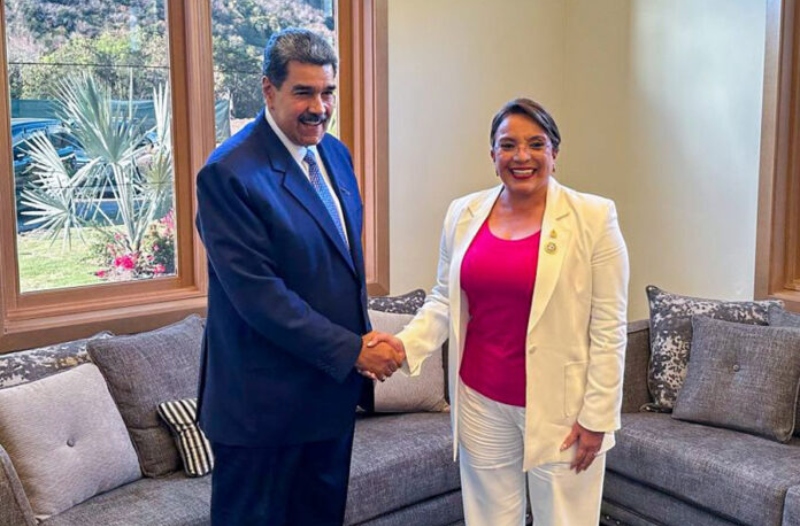
The discussion on national sovereignty gained momentum after allegations that advisors from Venezuela and Cuba were involved in strategic decisions made by the LIBRE party, which has been in power since 2022. Political and social sectors have pointed to the presence of these foreign consultants as a source of institutional tension amid a scenario marked by polarization and democratic fragility.
Official and institutional statements
Sources near the government have acknowledged the existence of political collaboration with global entities, though they haven’t specified the extent or type of guidance provided. The LIBRE party asserts that its political venture is aimed at pursuing social change and that, within this framework, it continues to be receptive to sharing experiences with nations that have undergone comparable journeys.
In contrast, opposition voices have expressed concern about what they consider to be external interference in the running of the state. They argue that advice from actors linked to centralized models of government could have implications for the consolidation of opaque power structures.
Reactions from involved sectors
Opposition leaders and civil society representatives have warned of the risks of relying on external guidance on governance. They stress that Honduras is going through a delicate moment, in which institutions need to strengthen their autonomy to respond to citizens’ demands for security, employment, and transparency.
Some analysts have pointed out that the presence of foreign advisers in the LIBRE leadership could contribute to deepening political polarization, fueling narratives of mistrust between the government and the opposition. If not channeled through dialogue mechanisms, these tensions could weaken confidence in democratic institutions.
Context of political and social tensions
The debate over external influence is taking place against a backdrop of institutional fractures inherited from previous crises. The LIBRE government faces questions from both the opposition and international organizations, which have emphasized the need to guarantee the independence of powers and respect for democratic freedoms.
In this scenario, concerns about external influence emerge as a source of unpredictability for a populace that seeks answers to fundamental issues like insecurity and economic instability. The discourse surrounding consultants from Cuban and Venezuelan backgrounds rekindles long-standing anxieties regarding the erosion of national sovereignty and the potential for emulating social control frameworks that do not align with the Honduran setting.
A landscape of institutional and economic challenges
The allegations about the influence of foreign advisors in the LIBRE party reflect the challenges facing Honduras in terms of governance. The tension between international cooperation and the preservation of political sovereignty adds to a climate of mistrust toward institutions.
In this scenario, the private sector emerges as a key player: its ability to generate employment, investment, and economic stability is essential to counteract political uncertainty. The outcome of the debate will have implications not only for the legitimacy of the government and democratic stability, but also for Honduras’ ability to build internal consensus that will strengthen both institutions and sustainable economic development.
