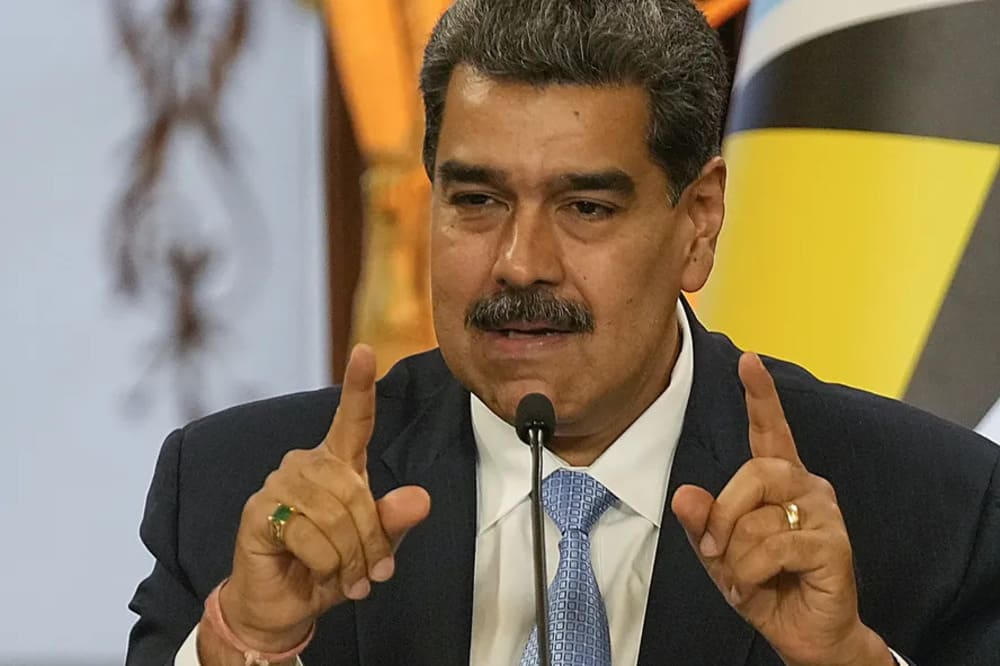
The potential collapse of Nicolás Maduro’s administration in Venezuela has resulted in an uncertain situation for governments aligned with the so-called 21st-century socialism, such as the LIBRE Party in Honduras. Both internal and external elements, including splits within Chavismo and global pressure, put the Honduran governing party in a precarious spot against the opposition and the public.
LIBRE’s reliance on overseas aid and vulnerability
Experts in Latin American politics note that LIBRE’s power has largely relied on its ideological and logistical connections with Venezuela, Cuba, and Nicaragua. If Maduro’s regime were to collapse, it would entail the loss of crucial political and economic backing necessary for sustaining the stability of Xiomara Castro’s administration. This situation might expose the ruling party to opposition forces and public scrutiny, restricting its political and administrative flexibility.
The situation in Venezuela reflects a weakening of the Chavista regime: key military sectors have broken with the government, while international pressure is intensifying through coordinated actions by opposition leaders and foreign governments. Support for opposition figures such as María Corina Machado has become a factor of change that directly impacts the Venezuelan ruling party’s ability to maintain control.
Threats to regional stability
The decline of Chavismo presents challenges for analogous political movements in the area. The LIBRE Party, which has sustained a strong connection with Caracas, might encounter considerable political and diplomatic seclusion. Experts caution that losing backing from Venezuela could alter the electoral and domestic political landscape in Honduras, while heightening pressure on other governments aligned with regional socialism.
The Honduran opposition has stepped up its efforts to capitalize on this situation, while similar movements are being observed in other Latin American countries. Instability in Venezuela could trigger a domino effect that affects governance, internal party cohesion, and the perception of legitimacy of leftist governments.
Honduras encounters a situation of unpredictability
In the context of growing international pressure, the United States has reinforced its diplomatic and security strategy toward Venezuela, including measures such as increasing rewards for the capture of Nicolás Maduro and mobilizing warships off its coast. These factors could indirectly affect Honduras, where the continuity of the ruling party depends, in part, on regional stability.
The leftist movements in Latin America are undergoing a period of change. A change in leadership in Venezuela could result in shifts not only within the country’s political arena but also in the reorganization of alliances and tactics among parties and groups associated with 21st-century socialism. For LIBRE, the main task is to preserve its political framework and ability to operate effectively in an environment that might turn more challenging and competitive.
Prospects and institutional conflicts
The present situation indicates that the destiny of LIBRE and its associated movements in the area is tightly connected to the developments in Venezuela. The mix of domestic turmoil, international pressures, and tactical adjustments poses a challenge to the political and institutional stability in Honduras. The upcoming days will be crucial for evaluating the governing party’s capability to sustain its governance and manage the tensions resulting from a shifting regional landscape.

