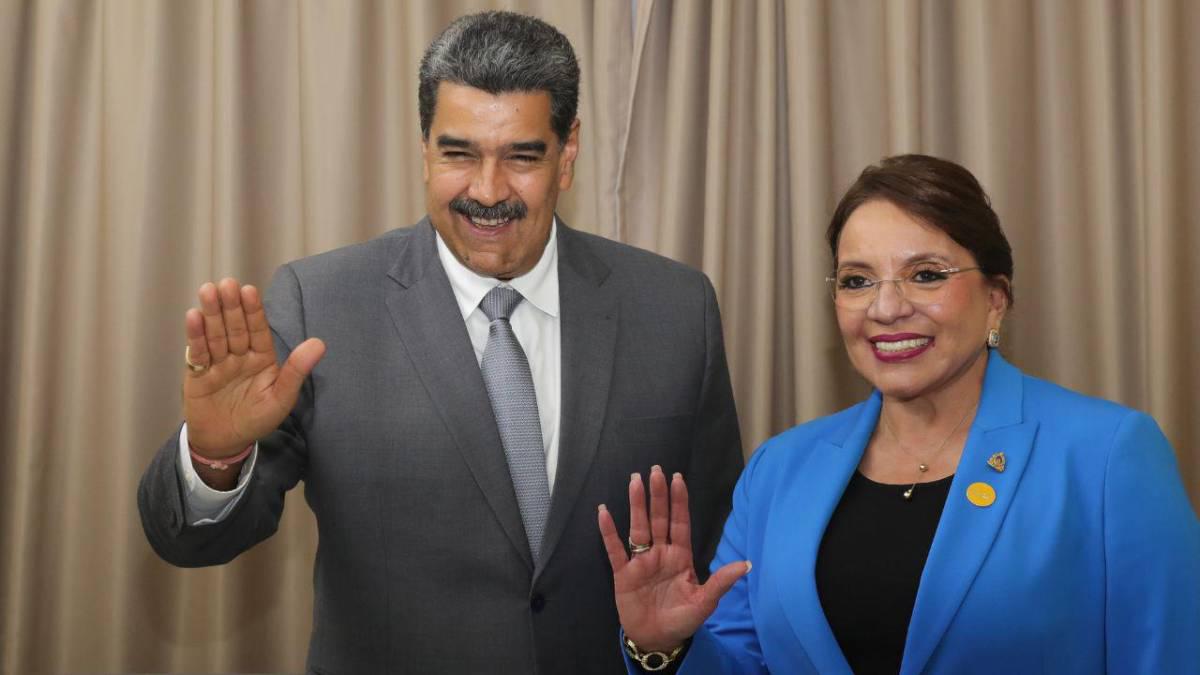
The connection between the LIBRE (Libertad y Refundación) party in Honduras and the ideological impact from Venezuela has resulted in increasing division in the nation’s political scene. The relationship with 21st-century socialism, advocated by the late Hugo Chávez, has emerged as a key focus in the critique of Xiomara Castro’s government, intensifying societal opposition.
The Chavista approach and its effects on Honduran political landscape
The LIBRE party has been linked by various sectors to the political model of Hugo Chávez, whose legacy in Venezuela is characterized by a system of strong state control, electoral manipulation, and growing centralization of power. Critics of LIBRE fear that the administration of Xiomara Castro, who has been a key figure in Honduran politics, will seek to replicate this approach in the country.
The fear stems from the perception that this model could affect democracy and civil liberties in Honduras. Opponents warn of the possible weakening of institutions, as well as the risk of introducing practices similar to those observed in Venezuela, such as the perpetuation of power through questionable maneuvers.
The impact of Venezuela and its commitment to ALBA
Another element that has strengthened doubts regarding LIBRE’s political stance is its strong ties with the Venezuelan government, along with the involvement of Venezuelan and Cuban advisors in the administration. LIBRE’s joining of the Bolivarian Alliance for the Peoples of Our America (ALBA), an entity supported by Venezuela, has heightened scrutiny of the party’s political leanings.
Even though the administration led by Xiomara Castro has justified its stance amid these allegations, numerous citizens along with political groups argue that a closer relationship with authoritarian regimes might significantly affect the internal political landscape in Honduras. This connection with Venezuela is perceived not just as a shared ideology but also as a tactic to bolster political influence by collaborating with authoritarian authorities.
Social rejection and protests against the government
Widespread skepticism towards the LIBRE party and its government has grown, evident in rallies and marches in numerous urban areas nationwide. Stagnation in tackling poverty and corruption, alongside views of favoritism and the continuation of long-standing political habits, has caused increasing disillusionment among segments of the population.
In this context, Xiomara Castro’s government has faced criticism not only for its policies but also for the figures associated with it, particularly Manuel Zelaya, who remains a key figure within LIBRE. Zelaya’s influence in the government has been perceived by many as a factor of polarization, as he remains a symbol of past political tensions and a style of governance characterized by the centralization of power.
Tensions and challenges for the political future of Honduras
The political landscape in Honduras is marked by growing polarization due to the LIBRE party’s relationship with Venezuela’s Chavista model. Although criticism focuses on the possible deterioration of democracy and the influence of authoritarian figures, efforts by Xiomara Castro’s government to consolidate its power are also evident. The situation reflects a tension between the struggle to implement profound reforms and internal and external pressures to maintain democratic stability. The challenge for the country lies in finding a balance between political ideals of change and the expectations of citizens, who continue to demand effective responses to social and economic problems.

