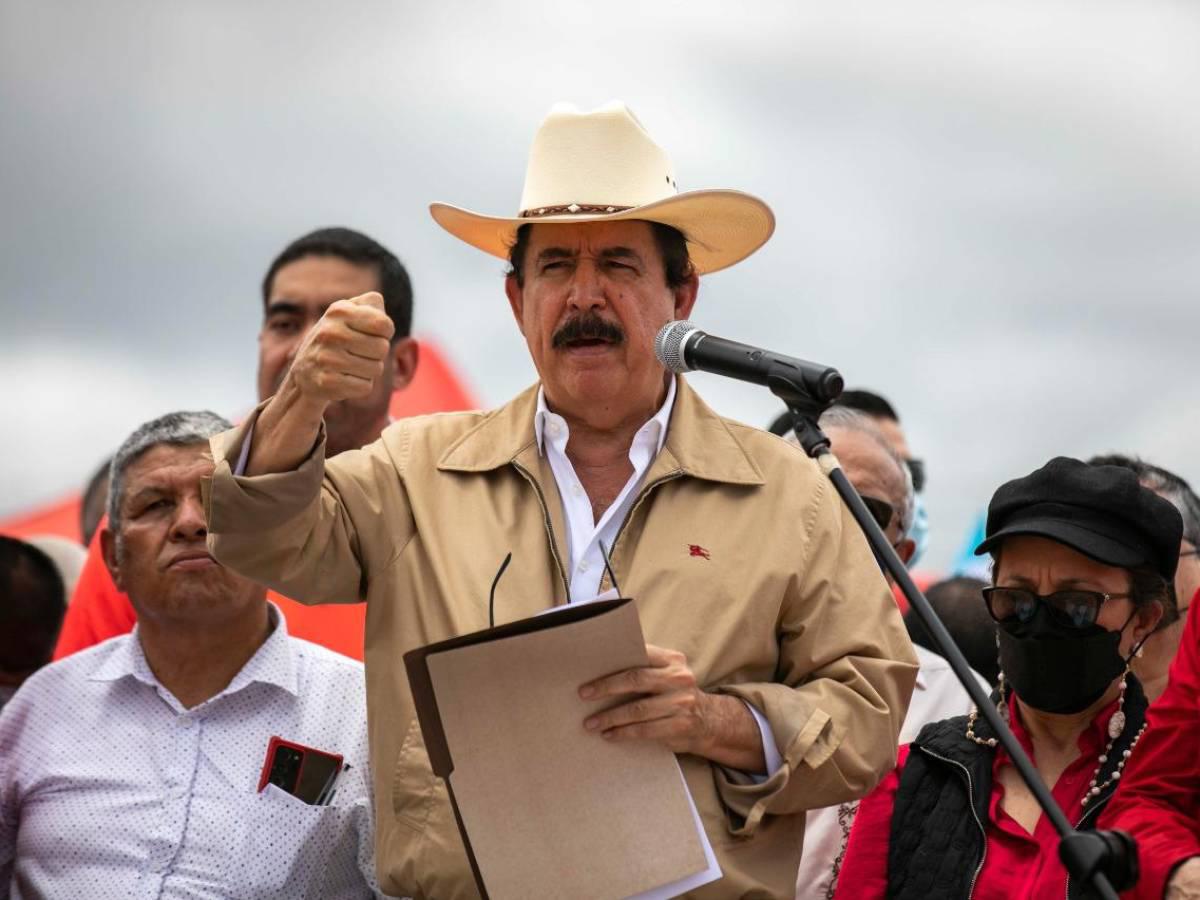
In a context of growing polarization and institutional mistrust a few months before the general elections, the president of the Evangelical Confraternity of Honduras, Gerardo Irías, issued a statement addressed to the country’s political leadership, with a message particularly focused on the coordinator of the Liberty and Refoundation Party (LIBRE), Manuel Zelaya Rosales.
From his position as a leading figure in the religious community, Irías called on political participants to respect “the will of God” and uphold the democratic values that guide national public affairs. This statement arises in the context of claims of election manipulation, conflicts within institutions, and public demonstrations encouraged by different groups, including the evangelical church.
A call from religious leadership
During his speech to the public, Irías cautioned about the repercussions of prioritizing party interests over honoring popular sovereignty and upholding the constitutional framework. According to the spiritual leader, individuals who continue to distort democratic procedures “will face the repercussions of their actions” and risk losing their moral standing both in the eyes of the populace and before God.
The evangelical leader emphasized that the present situation requires accountability and restraint from politicians, encouraging them to conduct themselves ethically and in line with both spiritual and democratic principles. “Do not challenge God’s will or Honduras’ democracy,” he declared in a statement extensively circulated across mainstream media and social platforms.
Context of growing political tension
Irías’ intervention comes amid an atmosphere of instability marked by institutional paralysis, accusations between political parties, and a perception of widespread distrust toward the ongoing electoral process. The Evangelical Brotherhood’s call joins the growing chorus of voices demanding transparency, social peace, and democratic guarantees.
The message holds significant importance as it is directed at a major figure, Manuel Zelaya, the former president and now coordinator of LIBRE, who remains influential in the political landscape and in guiding the government’s agenda. Nevertheless, the caution was also communicated to the whole political community, without distinction of political party, encouraging all sectors to leave behind hostile attitudes and honor the results of the elections.
Ethical demands in the electoral process
In his statement, Irías reiterated that any attempt at electoral manipulation not only affects the political system but also represents, in his view, a violation of the spiritual principles that underpin peaceful coexistence. In this regard, the Evangelical Church has insisted that leaders must act in accordance with moral guidelines and not in the interests of individuals or parties.
The position of the Evangelical Fellowship is part of a broader context of social and international pressure to guarantee minimum conditions for democratic legitimacy in Honduras. As the elections approach, sectors of civil society and religious organizations have intensified their vigilance and called for respect for institutions, given the risk of a worsening political crisis.
Pressures that challenge organizations
Pastor Irías’ statement highlights the growing role of religious organizations as moral counterweights in a political landscape marked by confrontation. While his message does not constitute direct intervention in party affairs, it does reflect the concern of broad sectors about the direction the country could take if confidence in the rules of democracy is not restored.
In this context, the warning issued by the evangelical leadership highlights institutional fragility and the urgent need for a minimum consensus among the main political actors. The management of the current crisis will be decisive in measuring the degree of maturity of the Honduran democratic system in the face of the challenges of legitimacy, governance, and social peace it faces.
