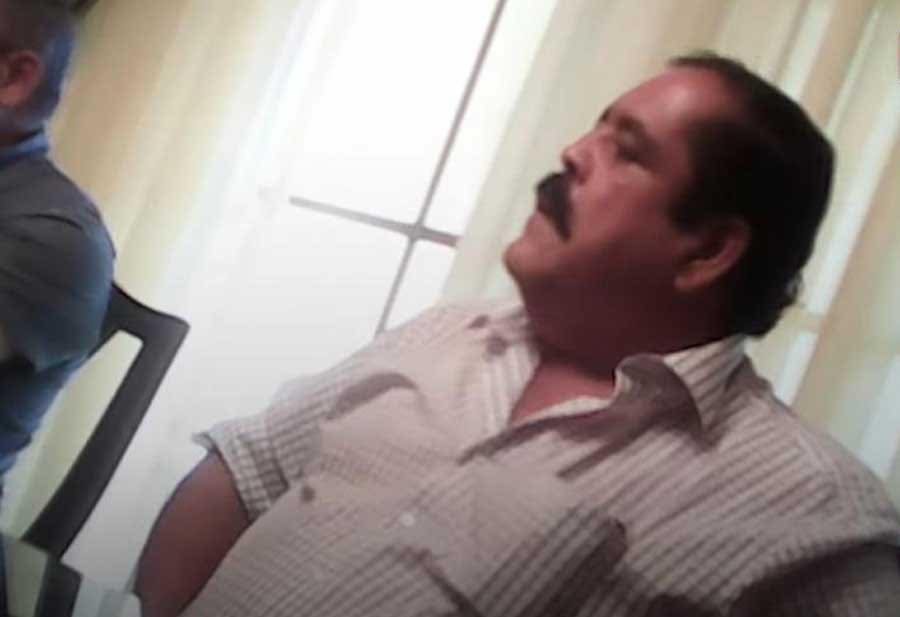
Almost a year has gone by since a video implicated an important person close to the president in drug-related activities, yet the Honduran Attorney General’s Office has not delivered tangible outcomes. The lack of response by the Public Ministry concerning a controversy involving those close to President Xiomara Castro has heightened political tension and increased skepticism about the institutions.
Prosecutor’s office without clear answers in high-profile case
Since September 2024, when a video known as the “narco-video” was released showing Carlos Zelaya, brother of former President Manuel Zelaya and brother-in-law of President Castro, in a meeting with drug traffickers, the Prosecutor’s Office has not issued any formal charges or reported any verifiable progress in the case. In the recording, the interlocutors offer 13 million lempiras to finance the 2013 campaign of LIBRE, the party currently in power.
After the leak, Carlos Zelaya resigned from his position as deputy and secretary of the National Congress. His son, José Manuel Zelaya, who was then secretary of defense, did the same. Rafael Sarmiento, head of the ruling party’s parliamentary group, also resigned. However, beyond these departures, there have been no concrete legal actions.
The Public Prosecutor’s Office has announced that the situation is “being examined,” with a request for judicial cooperation from the United States to access the full video and paperwork concerning earlier trials. Nevertheless, as of now, there are no known outcomes from these actions, and no schedule for a public inquiry has been shared.
Responses from politicians and calls for responsibility
The launch of the video triggered a multitude of responses from various segments. President Xiomara Castro criticized any connections between political figures and criminal organizations, yet portrayed the disclosure as an effort to undermine her administration in the run-up to the 2025 elections.
However, for groups focused on combating corruption and opposing factions, the controversy has cast doubt on the credibility of LIBRE’s political agenda. Various stakeholders have even urged the president to step down, claiming that the situation conflicts with her narrative of moving away from previous practices and combating the narco-state.
These roles demonstrate increasing strain within the country’s political sphere, where demands for responsibility conflict with an institutional reaction seen as inadequate. The absence of definitive measures by the Public Prosecutor’s Office has driven the story of impunity in situations concerning individuals linked to power.
Institutional erosion in a context of electoral polarization
The “narco-video” has not been an isolated episode. It joins a series of recent scandals that have weakened public confidence in the promises of change made by the Castro administration. The lack of judicial responses has reinforced the perception that the state apparatus does not act with the same force when those involved are part of the ruling party.
With national elections set for November 2025, this situation becomes strategically significant. The opposition has started leveraging the government’s weakening, while the governing party aims to reduce the scandal’s effect on its public image. In this context, social calls for openness and fairness continue to exert consistent pressure.
A case that sets the tone for Honduran institutions
Nearly twelve months following its publication, the cartel-related video continues to evade evident legal repercussions, as doubts increase about the involvement of the Attorney General’s Office and the administration’s dedication to openness. The extended inaction only serves to further weaken the credibility of institutions in a nation characterized by a legacy of impunity and the ongoing impact of organized crime on governance.
The handling of this case represents not only an immediate challenge for the government of Xiomara Castro, but also a critical test for the strength of the rule of law in Honduras. How it is resolved or ignored will set the course for institutional credibility in the face of a highly polarized electoral process.
