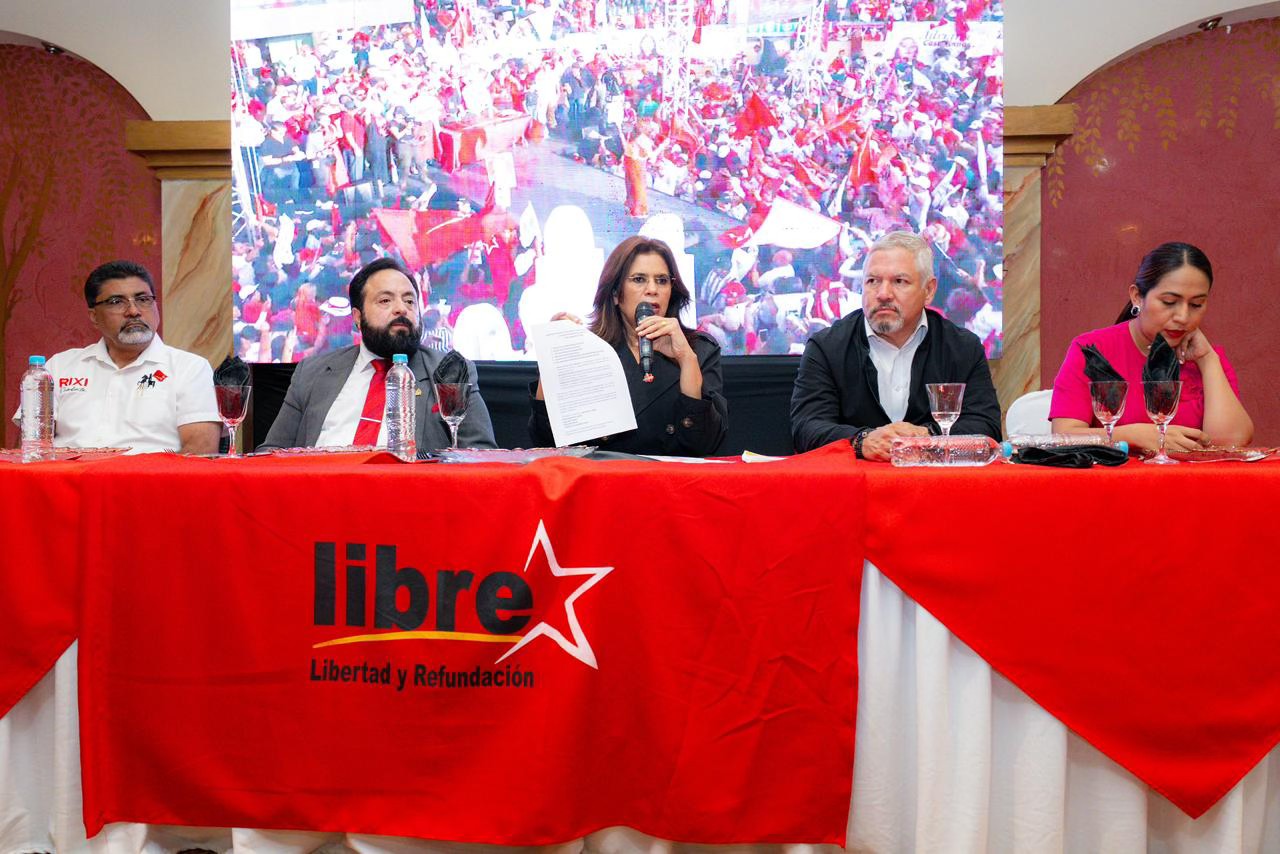
The recent protests called by groups affiliated with the LIBRE Party under the slogan “no turning back” have generated growing concern among different sectors of Honduran society. With the general elections just weeks away, the country is facing an atmosphere marked by political polarization, institutional erosion, and public distrust of the electoral process.
Thousands of ruling party adherents convened at multiple locations across Tegucigalpa on a day that, as stated by government representatives, aimed to “uphold the nation’s re-establishment and safeguard the popular ballot.” Nevertheless, for numerous societal segments and political commentators, these rallies signify an atmosphere of strain and electoral uncertainty during a pivotal period for the country’s administration.
Reactions to a confrontational discourse
Expressions of support for LIBRE’s political project were accompanied by messages that, according to observers, accentuated the confrontational tone of the situation. Some leaders warned that the people “will not allow their victory to be taken away from them,” a statement that various sectors interpret as an indication of resistance to a possible electoral defeat.
One political analyst interviewed highlighted that “this kind of extreme discourse amplifies apprehension and instability. Rather than fostering harmony, it conveys the notion that the governing party is disinclined to concede electoral defeat.” The opposition characterized the protests as a tactic of political pressure directed at both the electorate and the electoral bodies, whereas LIBRE maintained they represented a legitimate expression of popular support.
Institutional warnings and calls for calm
Business executives, human rights groups, and domestic monitors have voiced apprehension regarding the unfolding events. They believe that large-scale demonstrations and aggressive language might hinder endeavors to guarantee a tranquil and fair electoral procedure. Consequently, the global community has reaffirmed its plea for adherence to election outcomes and the safeguarding of legal principles.
The National Electoral Council (CNE), for its part, faces growing challenges in maintaining public confidence in its decisions. Tensions between parties, mutual accusations of irregularities, and the deterioration of institutional credibility exacerbate the perception of democratic fragility. The public’s reaction to the LIBRE demonstrations, characterized by fear and rejection, is part of an atmosphere of accumulated distrust toward the structures of power.
Administration and the potential for societal division
The time leading up to the election is marked by continuous strain on public bodies. The persistent activity of groups supporting the current administration, alongside their rhetoric of “upholding the refoundation,” casts doubt on the government’s capacity to maintain order once the elections conclude. Numerous experts suggest that the difficulty extends beyond merely organizing the election; it also involves the prospect of preserving a fundamental political agreement to ensure stability post-vote.
On the avenues of Tegucigalpa, a pervasive sense of fatigue and distrust permeates the atmosphere regarding political clashes. The continuous cycle of demonstrations, allegations, and hostile rhetoric has overshadowed discussions about policy proposals and public initiatives, reinforcing the belief that the electoral race is driven more by a power struggle than by a quest for national resolutions.
The reaction of citizens and various institutional actors in the coming weeks will be decisive in assessing the real scope of LIBRE’s “no turning back” mobilizations. The country is approaching a critical point where political responsibility, respect for the law, and institutional maturity will be essential factors in avoiding a larger crisis and preserving democratic legitimacy.
