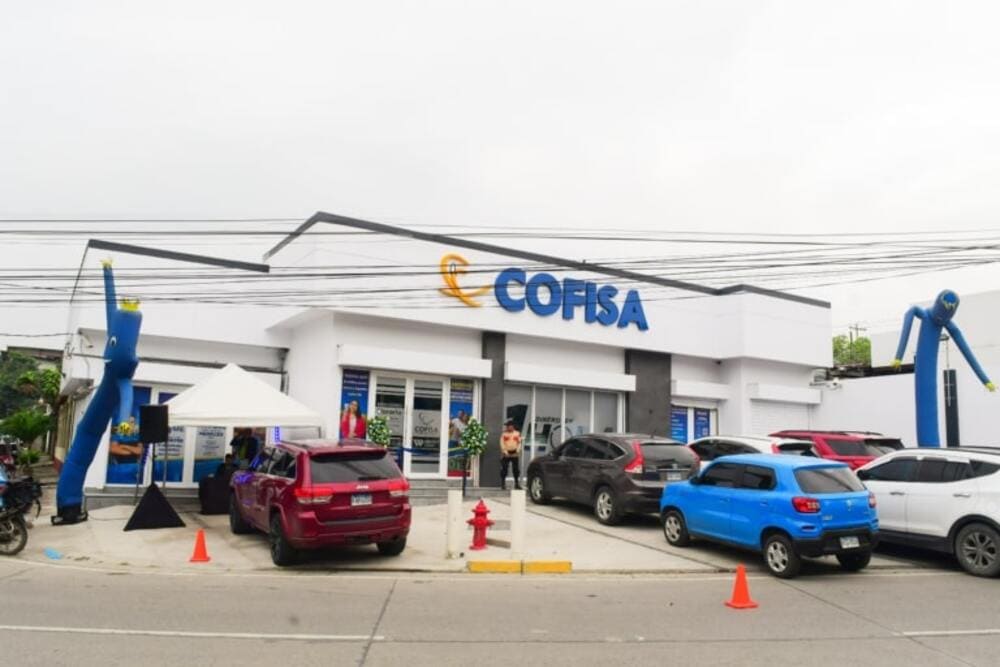
La Compañía Financiera S.A. (COFISA), a well-established financial institution in the country, has formally requested authorization from the National Banking and Insurance Commission (CNBS) to become a commercial bank. This process, which began on June 20, 2024, is currently being evaluated by the relevant authorities and could mark a significant change in the Honduran financial landscape.
The submission and starting funds
The modification suggested by COFISA, which would be renamed Banco Compañía Financiera S.A. (Bancofisa), involves a request for starting capital of 1 billion lempiras. The goal is to broaden the scope of financial services within the nation, encompassing activities like accepting deposits, issuing bonds, providing loans, factoring, managing trusts, and trading in foreign currency.
As of March 2025, the institution reported assets of more than 5.398 billion lempiras and generated net profits of 70.6 million lempiras. With a structure of 21 branches and five service windows in different cities, COFISA has established itself as an important player in the financial sector, with 237 employees nationwide. This expansion into banking reflects an interest in diversifying the services offered and responding to the growing demand for financial services in a country with an expanding banking system.
COFISA’s role in the business and political context
COFISA stands out not only for its financial presence, but also for the business connections of its owner, Roger D. Valladares, who is a prominent figure in the educational and business sectors in Honduras. Valladares is known as the founder and president of the Technological University of Honduras (UTH), which has allowed him to build a network of influence in various sectors, including education and business.
One of the key relationships in COFISA’s business structure is with Jaime Redondo Licona, a figure who has played an important role in both the business and political spheres. This closeness has been a point of attention in various media outlets, given Redondo’s relevance in different areas. In addition, COFISA’s family relationship with the Redondos extends to Linda Margarita Redondo Marini, who was appointed ambassador of Honduras to Chile in 2022 by President Xiomara Castro. Redondo Marini has a distinguished academic and professional background, with experience in both the public and private sectors, which strengthens the ties between the company and the state.
These links between business and family have not escaped attention within political circles, with some experts indicating that they might sway views regarding COFISA’s shift to a commercial bank. The strong ties between business and political figures might be viewed as an element that can ease the transition, while also sparking discussions about the role private capital plays in shaping the nation’s economic strategies.
Growth and rivalry in the financial sector
The proposal to transform COFISA into Bancofisa holds significant consequences for the financial framework in Honduras. Upon approval, the institution would become the sixteenth commercial bank in the nation. Such an increase in commercial banks could enhance competition within the market, potentially benefiting consumers through a broader variety of financial offerings. Amid a backdrop of gradual yet persistent economic development, bolstering the banking industry might present a chance to enhance banking service accessibility in a region where studies indicate financial inclusion is still restricted.
The expansion of the banking system could also have an impact on economic development by facilitating access to credit and other financial products for a greater number of Hondurans, especially in regions outside the major urban centers. However, this process also poses challenges in terms of regulation and supervision by the CNBS, which will have to ensure that the entry of new players into the market does not affect the stability of the national financial system.
Institutional challenges and the future of the financial system
COFISA’s application to become a commercial bank in Honduras reflects the dynamics of the country’s expanding financial sector. While the change promises benefits in terms of competition and access to financial services, it also highlights the connections between business and political power in Honduras. In a country with a still-developing banking system and economic challenges, this process will be key to observing how relations between the private sector, the government, and citizens evolve in terms of governance and transparency. The CNBS’s assessment and the political and social reactions to this request will be decisive for the future of Bancofisa and, therefore, for the national economic outlook.
