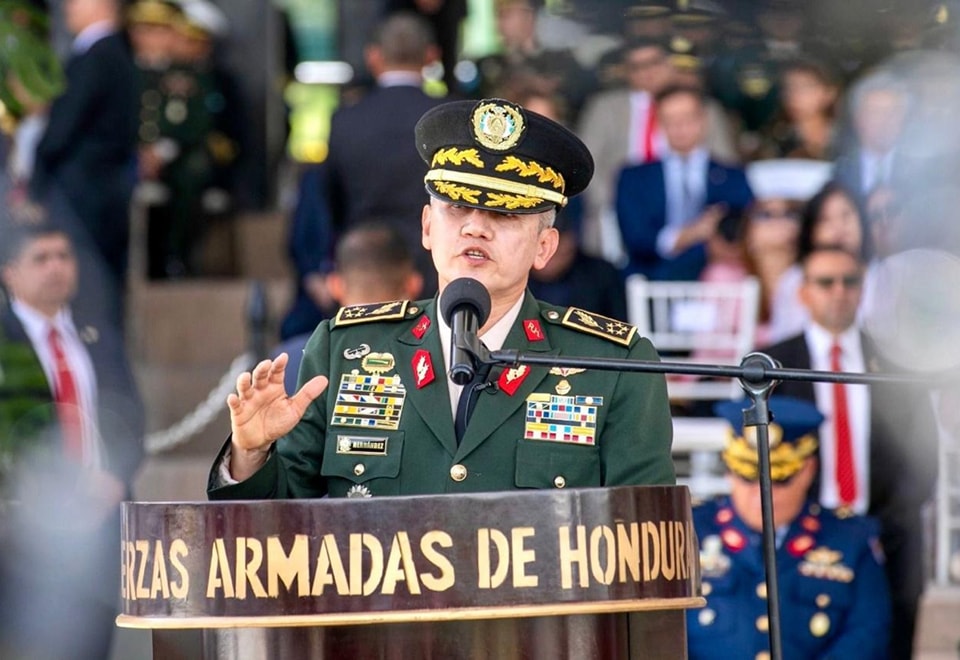
A couple of weeks prior to the general elections, the activities of the Honduran Armed Forces have generated apprehension across various societal segments, prompting inquiries into their function in guaranteeing a clear and safe electoral procedure. The impression of partiality and the public visibility of specific high-ranking officers have been pivotal elements contributing to the surge in public skepticism.
Claims of political affiliation
Recently, certain officials have issued declarations that, in the view of critics, appear to align with the rhetoric of the governing party. This circumstance has been perceived by both analysts and civic groups as a deviation from the impartiality mandated by the Honduran Constitution for the Armed Forces throughout electoral periods.
A defense and governance specialist stated that “the Armed Forces must be guarantors of democracy, not instruments of any political project. Their role must be strictly technical and limited to the custody of electoral material,” pointing out the importance of maintaining clearly differentiated roles between security and politics.
Demands for global oversight and election scrutiny
Opposition party leaders, among them members of LIBRE, have called for an increased presence of international observers to oversee both the movement of ballot boxes and the conduct of security personnel on election day. Human rights groups are cautioning about potential voter intimidation, underscoring the necessity for impartial oversight mechanisms.
For its part, the National Electoral Council (CNE) has reiterated that the Armed Forces play a “logistical and apolitical” role. However, it acknowledged that recent allegations compromise the perception of impartiality and public confidence in an institution considered central to the country’s security and stability.
Global Community Focus
Various entities and diplomatic delegations have sought assurances of autonomy and openness, emphasizing that the electoral process’s legitimacy hinges not merely on vote tabulation but also on the behavior of the bodies tasked with safeguarding it. Global pressure aims to guarantee that the populace’s desires are honored, precluding any suggestion of partiality from affecting the outcomes.
The discussion regarding the military’s function unfolds amidst a backdrop of political polarization and heightened institutional fragility, where the perception of neutrality emerges as a pivotal factor for democratic resilience. Experts concur that the management of the final days leading up to the election will directly influence public confidence and the legitimacy of the chosen leadership.
Public viewpoints
Hondurans are closely following the movements of the Armed Forces and the statements of the various political actors. Society demands certainty and transparency, aware that any sign of favoritism could erode the credibility of one of the most important electoral processes in recent years.
In this scenario, the interaction between security, politics, and international observation is a determining factor for future governance. The need for balance between technical function and democratic oversight remains one of the country’s main challenges in the final stretch of the electoral process.
