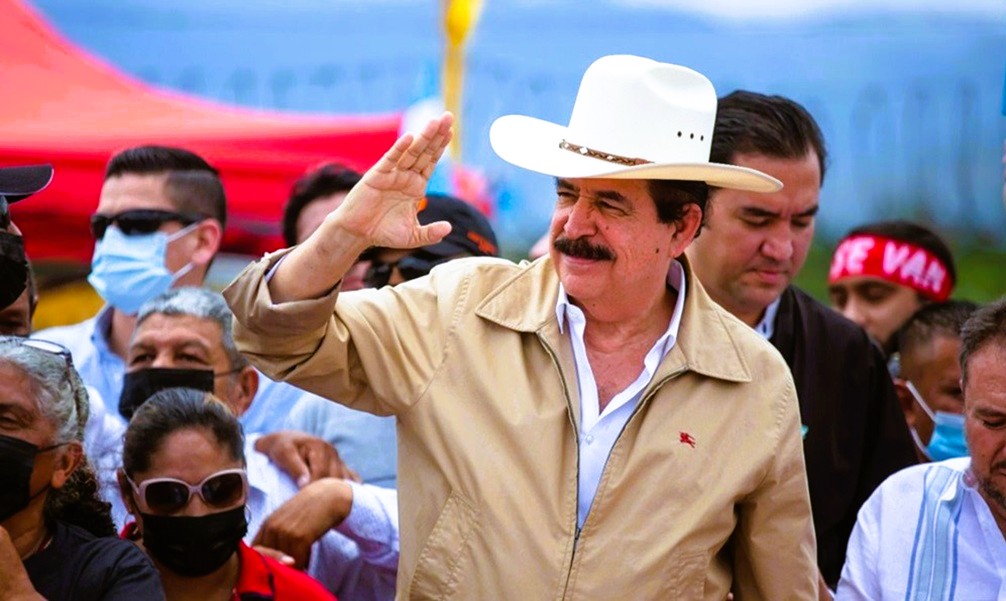
A bit more than four months ahead of the general elections set for November 30, Honduras is experiencing an institutional turmoil characterized by power concentration, conflicts among state entities, and an increasing public mistrust environment. At the heart of this circumstance is Manuel “Mel” Zelaya Rosales, who is a past president and presently serves as the general coordinator for the Libertad y Refundación (LIBRE) party. He is regarded by multiple groups as the primary political strategist for the ruling party and a significant player in determining the pre-election context.
Political control and institutional apparatus
Since coming back to politics following the 2009 coup, Zelaya has established a network of influence that surpasses party leadership. His reach spreads to the executive arm under his wife, President Xiomara Castro, as well as the National Congress and independent entities like the National Electoral Council (CNE), by strategically placing allies and relatives in key roles.
Analysts and local media agree that this centralization of decision-making is a deliberate strategy by Zelaya aimed at consolidating LIBRE’s control over state institutions. Among the most recurrent criticisms is the selective use of public resources and mechanisms to favor party interests, which has raised questions about the democratic health of the country.
Crisis in the electoral body and public mistrust
One of the main sources of institutional tension is the CNE, whose independence has been called into question due to internal blockages, external pressure, and disputes among its members. Opposition sectors and civil society organizations have warned of the risk of an electoral process controlled by the ruling party, which increases the possibility of challenges, conflict, and the erosion of democratic legitimacy.
Organizations related to LIBRE, known for spearheading protests and blockades backing the government, have also faced allegations of pressuring election officials. The increasing belief that institutions are being manipulated has undermined trust in the process, creating a climate of division and dissatisfaction that may lead to low voter turnout, demonstrations, or events of electoral unrest.
Controversies, strategies, and internal conflicts
In this context, Zelaya’s circle has been shaken by incidents that have harmed the party in power’s reputation. The latest, associated with the notorious “narco-video,” has resulted in the departure of individuals allied with the ex-president and increased strains in the administration. Despite Zelaya’s attempts to dissociate himself from these occurrences, his influence as a political strategist has been crucial in brokering internal compromises to avert additional splits within LIBRE.
Despite the turbulence, Zelaya has managed to maintain party cohesion by forging alliances and defusing divisions that threatened the stability of the ruling party’s political project. This room for maneuver reinforces his role as an indispensable figure for the ruling party’s governability, but it also makes him the main target of criticism of the current democratic situation.
A key figure in the configuration of power
Zelaya’s trajectory from his ouster in 2009 to his current position reveals his ability to influence the national agenda and shape the country’s political dynamics. Founder of LIBRE and architect of its rise to power in 2021, he has played a central role in the party’s strategic decisions, even in contexts of crisis and confrontation with traditional sectors.
To opponents, Zelaya is seen as the primary hindrance to democratic bodies; to backers, he is viewed as a political figure who has challenged the established elites and advocated for a national rebuilding plan. This division reveals a significant split within Honduran society, where political personalities evoke both strong approval and disapproval.
An uncertain scenario ahead of the electoral process
Mel Zelaya’s role in the Honduran political landscape raises questions about the country’s institutional direction and the transparency of the upcoming electoral process. The combination of power concentration, internal tensions within the electoral bodies, and scandals that erode public confidence creates an environment of high uncertainty.
With the electoral calendar advancing and political divisions growing, Honduras faces the challenge of ensuring a legitimate and credible process. The outcome of this stage will depend largely on the ability of institutional actors to resist pressure, restore public confidence, and ensure fair conditions for the democratic contest.
