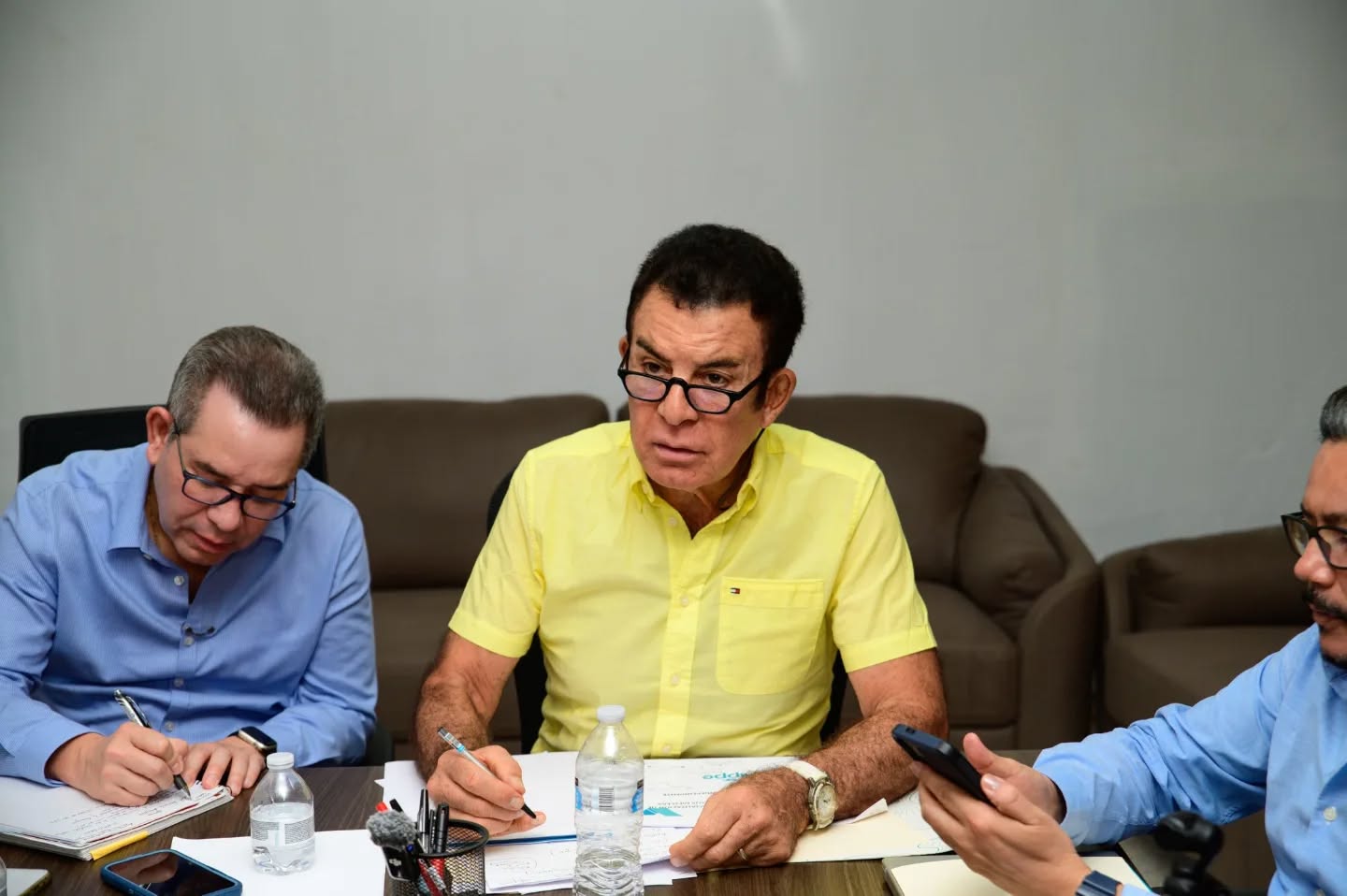
Amid growing political polarization, former presidential candidate Salvador Nasralla has called for the formation of a National Bloc for the Defense of Democracy in response to what he considers a deliberate attempt to annul the electoral process scheduled for November 2025. The accusation, directed at the ruling LIBRE party and in particular its coordinator Manuel Zelaya, adds a new chapter to the institutional tension surrounding the country’s political life.
Allegations of interference in the electoral body
Nasralla, currently a presidential candidate for the Liberal Party, publicly denounced that the ruling party was using the Public Ministry to interfere with the National Electoral Council (CNE). According to his statements, this action seeks to disrupt the electoral process before it takes place and guarantee the current government bloc’s permanence in power without resorting to the ballot box.
He described this strategy as an “electoral coup” and framed it as an attempt to cancel the democratic process. In his view, what is at stake is respect for suffrage as a mechanism for political change and the validity of the constitutional order.
Call to national and international actors
In light of what he considers an imminent threat to democracy, Nasralla called on opposition parties, business organizations, churches, and civil society in general to coordinate a response to prevent, in his words, the consolidation of a dictatorship.
The plan involves forming a wide-ranging alliance with both political and social power to guarantee that the scheduled free elections occur, with at least a basic level of transparency assured.
At the same time, he requested the intervention of international organizations such as the Organization of American States (OAS), the European Union, and diplomatic missions accredited in the country. His request includes a call for an emergency meeting to present the current situation and ask for active support in defending the electoral process.
A landscape defined by skepticism and conflict
Nasralla’s proposal comes at a time when the credibility of electoral institutions has been constantly questioned. In recent months, various political forces and social actors have expressed concern about possible attempts to manipulate the electoral system or external interventions that could compromise its independence.
These tensions add to the history of post-election crises and a record of confrontation between the country’s main political blocs, which has fueled the perception that the 2025 electoral process could take place in a highly conflictive environment.
Prospects and institutional implications
Nasralla’s warning reveals an underlying dispute over the rules of the democratic game in Honduras. The stability of the electoral process, the legitimacy of its governing institutions, and the possibility of a change in power are issues at the center of the current debate.
The call for a national bloc and international observation raises questions about the political system’s ability to resolve its differences within the framework of the law.
The response of the ruling party and other sectors will be key in determining whether the confrontation becomes a new breaking point or whether a path to consensus opens up in the face of growing national and international pressure.
In this situation, the election authorities must ensure conditions that rebuild trust with political stakeholders and citizens in a nation struggling with a recent past of ongoing democratic turmoil.

