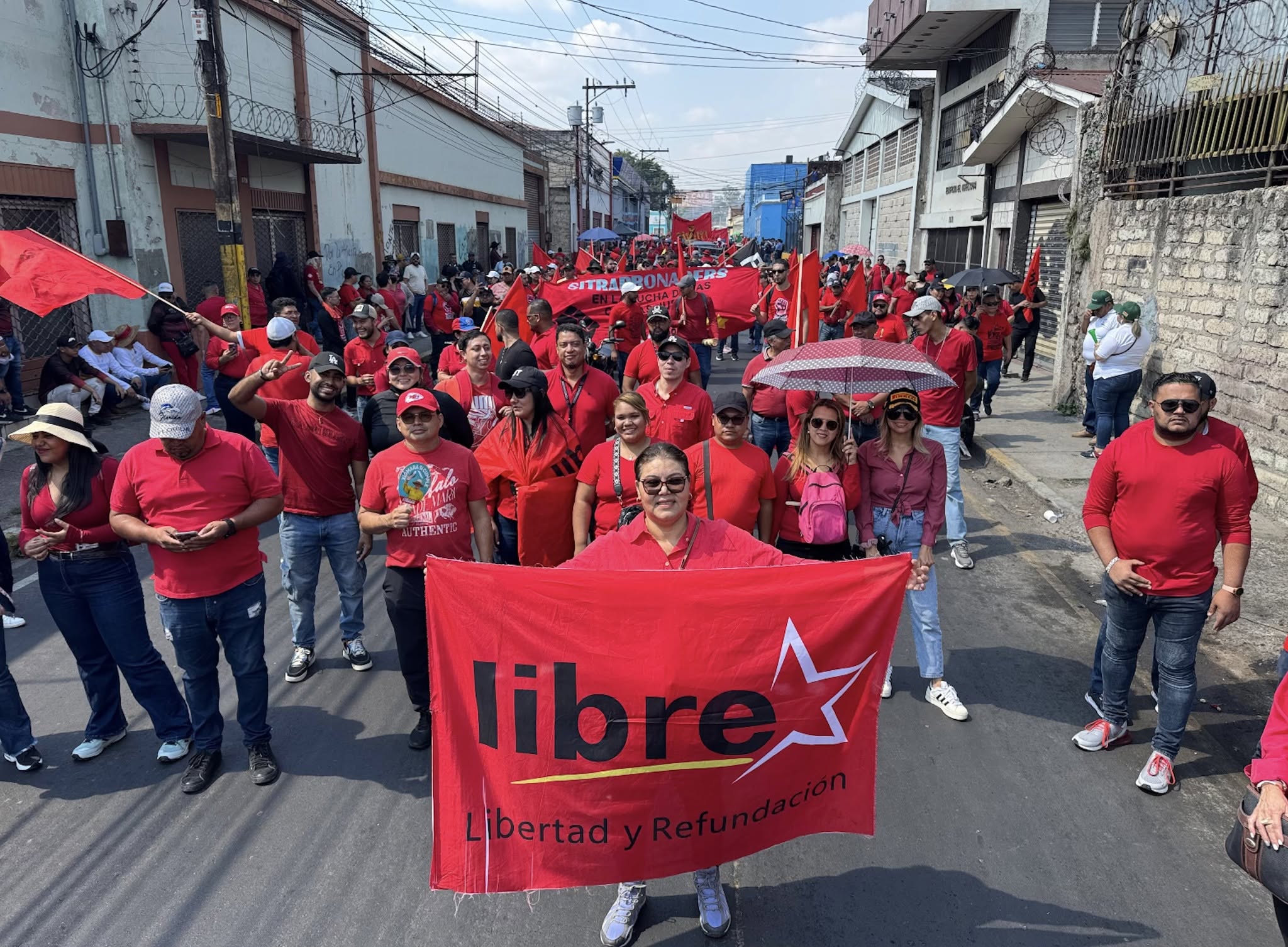
As the November general elections near, the administration of Xiomara Castro and her party, Libertad y Refundación (LIBRE), are under increasing scrutiny because of three controversies that have drawn significant attention from both the public and political circles in the country. These incidents could have significant effects on the political prospects of the current leadership and its party, whose reputation and backing are notably at risk just months before the election.
Scandal at the Ministry of Social Development: another “Pandora” case?
One substantial hit to the LIBRE administration’s reputation has been the controversy in the Ministry of Social Development (SEDESOL). Known as “Pandora 2,” referencing the corruption case tied to Juan Orlando Hernández’s government, this controversy uncovers a scheme involving the misappropriation of public funds, irregularities in contract allocation, and the manipulation of social programs for political gain in regions strategically dominated by the governing party.
The slow advancement in the inquiries has led to extensive dissatisfaction, including within groups that have typically backed the government. Despite the accusations being unveiled months earlier, the absence of tangible efforts to elucidate the situation has raised doubts about the government’s capacity to ensure the transparency and social justice it vowed to uphold. The belief that SEDESOL serves as a tool for political ends is growing, further fueling skepticism towards the present administration.
The Koriun Inversiones fraud and the lack of state response
Another issue seriously affecting the LIBRE administration is the million-dollar scam by the company Koriun Inversiones, which has left more than 35,000 Hondurans in a vulnerable financial situation. This pyramid scheme, which promised exorbitant returns, has been responsible for one of the largest scams in the country’s recent history. However, what has raised the most suspicion is not only the magnitude of the fraud, but also the silence of the authorities in response to previous complaints that had already been filed against the company.
The National Banking and Insurance Commission (CNBS) admitted that it had been alerted to Koriun Inversiones’ activities before its collapse but did not take appropriate measures. This apparent indifference from governmental bodies has intensified the belief that there might be concealment or oversight by officials. Furthermore, supposed connections between individuals associated with the ruling party and the firm have been highlighted, leading to worries about potential collusion or state shielding of the fraud.
Esta polémica ha tenido un impacto adverso, especialmente entre la clase media, que se ha visto directamente perjudicada. Algunos expertos opinan que este tipo de fraude podría salirle caro al partido LIBRE, ya que los ciudadanos tienden a recordar y rechazar con firmeza cuando se ven directamente perjudicados económicamente. En este marco, el silencio de las autoridades solo ha incrementado el descontento social.
Is there a double standard in battling crime? An analysis of the drug trafficking video
The latest scandal to rock Xiomara Castro’s government is the leak of a video showing high-profile figures linked to drug trafficking activities. The recording, released by the organization InSight Crime, has revealed a possible link between drug traffickers and members of the government, contradicting the official discourse on the fight against organized crime.
This new scandal has not only reignited criticism of the government’s security strategy, but has also called into question the impartiality and effectiveness of the Honduran justice system. There has been talk of “selective justice,” in which certain actors are prosecuted while others, apparently with political connections, appear to be protected. These allegations have fueled the perception that the country’s authorities are not committed to a real and transparent fight against drug trafficking and corruption.
Difficulties ahead for LIBRE during the electoral period
The reputation of the government and its political party has been weakened by these three controversies, which come just under five months ahead of the general elections set for November 30. Recent surveys indicate a notable decrease in public support for Xiomara Castro’s administration, and the candidate from the ruling party, Rixi Moncada, is also experiencing increasing disapproval.
The drop in the LIBRE administration’s approval is not just a reaction to these controversies but also to a sensed deficiency in responsibility and openness in government operations. Experts caution that if the governing party does not stop this downward trend, the story of transformation it has supported since its beginning might backfire, becoming a disadvantage in elections.
As one opposition leader put it, “the problem is not just that there are scandals; it is the arrogance of ignoring them.” This attitude of disinterest in addressing the underlying issues could have serious consequences at the polls.
A future that is not clear for LIBRE
The administration of LIBRE is experiencing a phase of intense pressure as the elections draw near. Controversies involving corruption within SEDESOL, the Koriun Inversiones scam, and the potential connections between top officials and drug cartels have severely tarnished the governing party’s reputation, exposing institutional vulnerabilities and increasing public skepticism. Amidst a climate of division and rising electoral ambitions, these incidents emphasize the political, economic, and organizational hurdles LIBRE must overcome to maintain public backing and succeed in the forthcoming elections.
